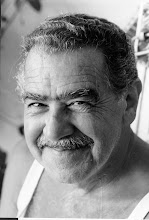
Camilo Vergara, like a good ecologist, deliberately focused on “disturbance” sites, including drug houses, homeless encampments, and areas of noxious landuse dumping as well as assorted margins and interstices "often lacking political representation or even a name". As the crack cocaine epidemic made street-level photography more risky, he began to use rooftops to generate panoramic bird’s-eye views, which, in turn, revealed unsuspected landscape facets.

A good example of Vergara’s tenacious methodology is his case study of a once magnificent apartment complex at the corner of 178th Street and Vise Avenue, near the Bronx Zoo. When he first started visiting the “Castle” in the winter of 1980, the heating had failed and tenants were beginning to leave. Seemingly no resources were available to rehabilitate the building’s faded glory. The next fall was fire season. Although one might assume that buildings burn and become derelict from the ground up, Vergara discovered that the opposite was true. The first of twelve apartment fires began in occupied units on the top floor. Subsequently scavengers looted pipes and radiators from the fire-damaged apartments, leading to flooding and water damage on floors below. Tenant flight accelerated.By January 1983 the complex was completely abandoned and efforts had been made to seal all the windows and entrances with cinder blocks. Scavengers, nonetheless, continued to find their way inside to “mine” the building of saleable materials. As the building continued to deteriorate over the next two years, it blighted the rest of the neighborhood: attracting crime, depressing property values, and encouraging more abandonment. Finally in 1985 it was bulldozed into oblivion.


![[...]](https://blogger.googleusercontent.com/img/b/R29vZ2xl/AVvXsEjeNC2Kyxd34r2LuofHe9-vdXHeHwG3_2NhVmIOTlK2moU0Q4R7taMlS8iMmQgEl1-NdaRsPrLdREzfQZYKfUgjslwLZUZe67dAfFBREu-YRx6WGX-vAUt5eJT4_-lFwT4dGzGCQQ/s220/11798115_858304687558226_1857652538_n.jpg)